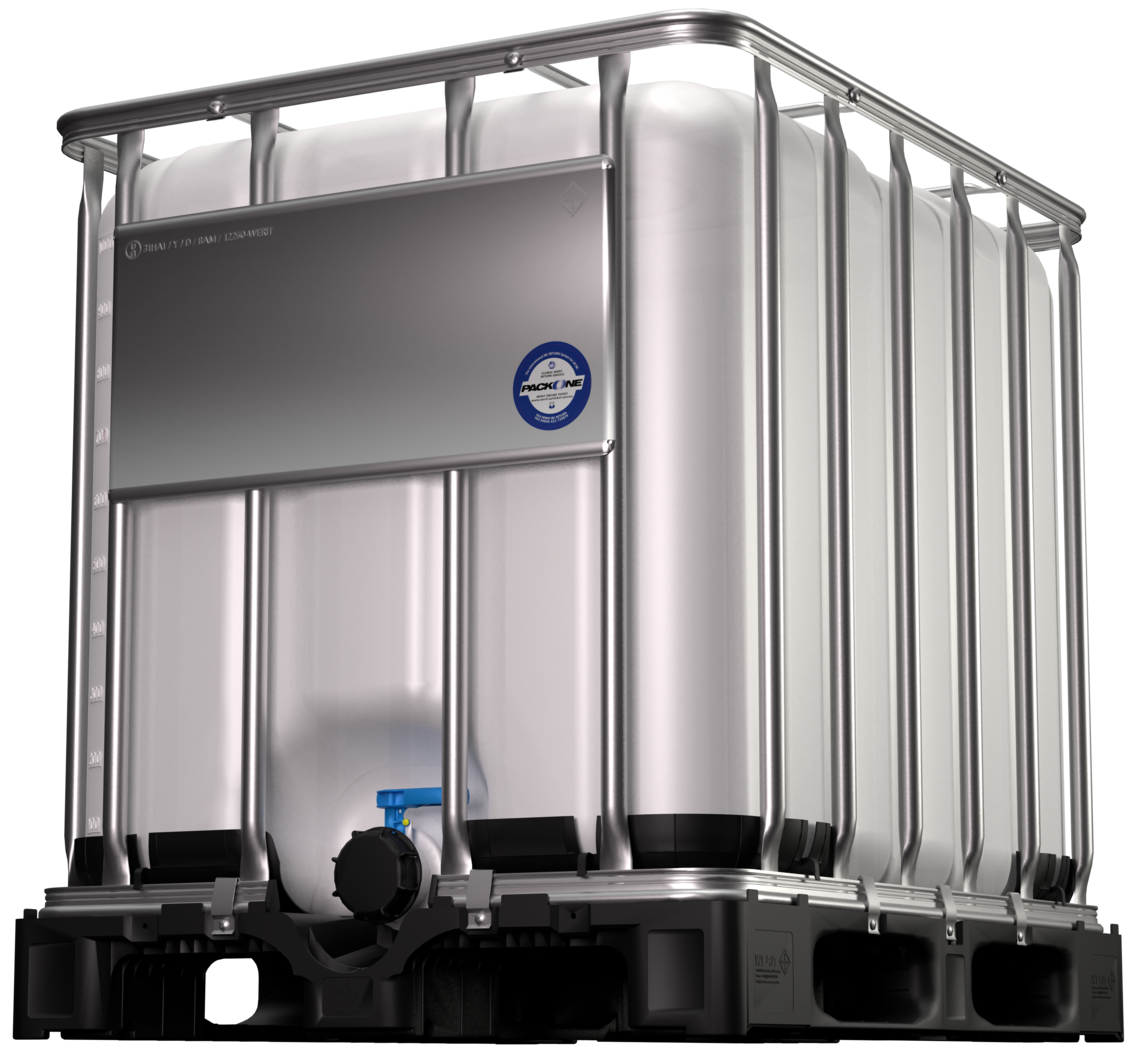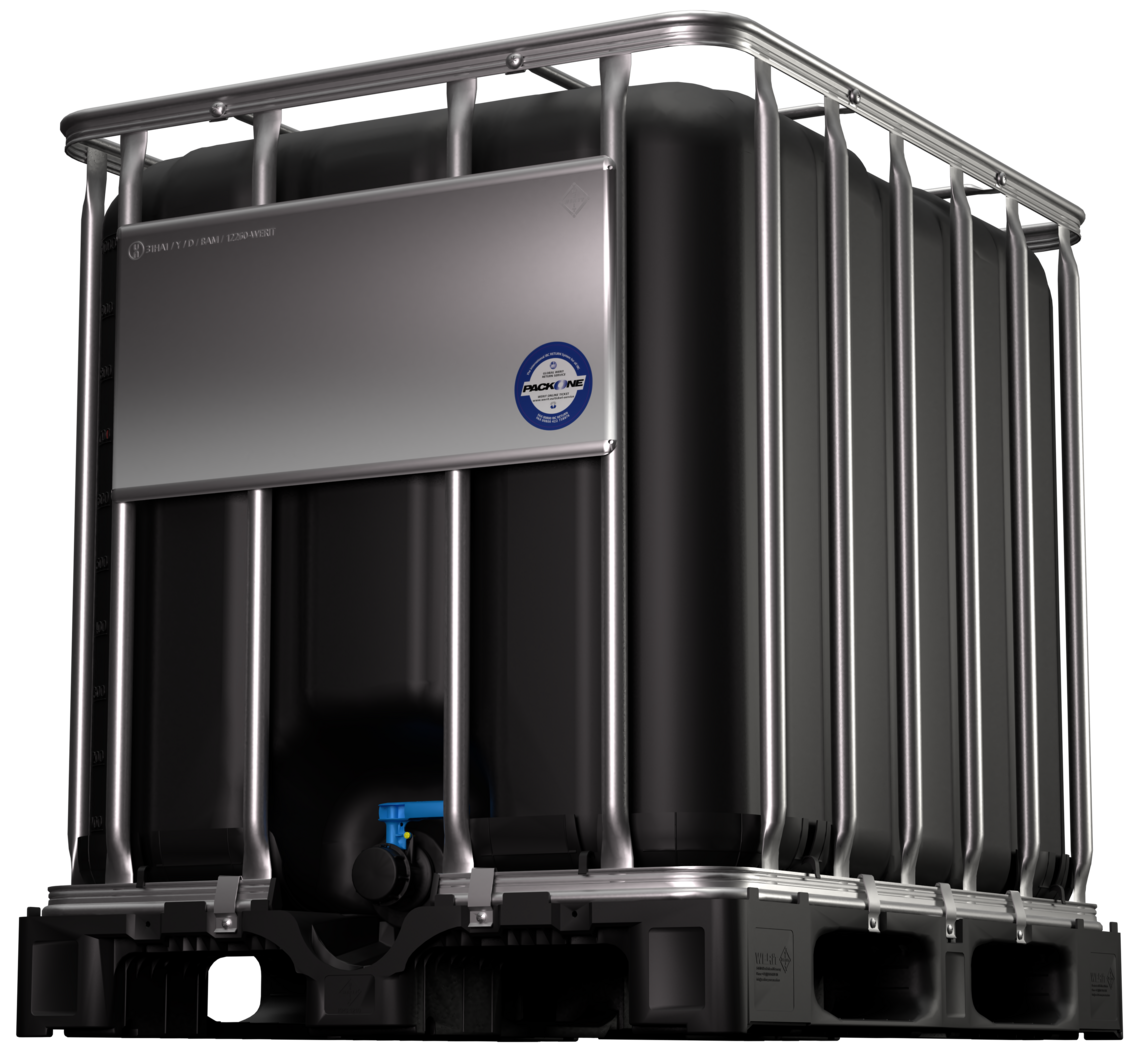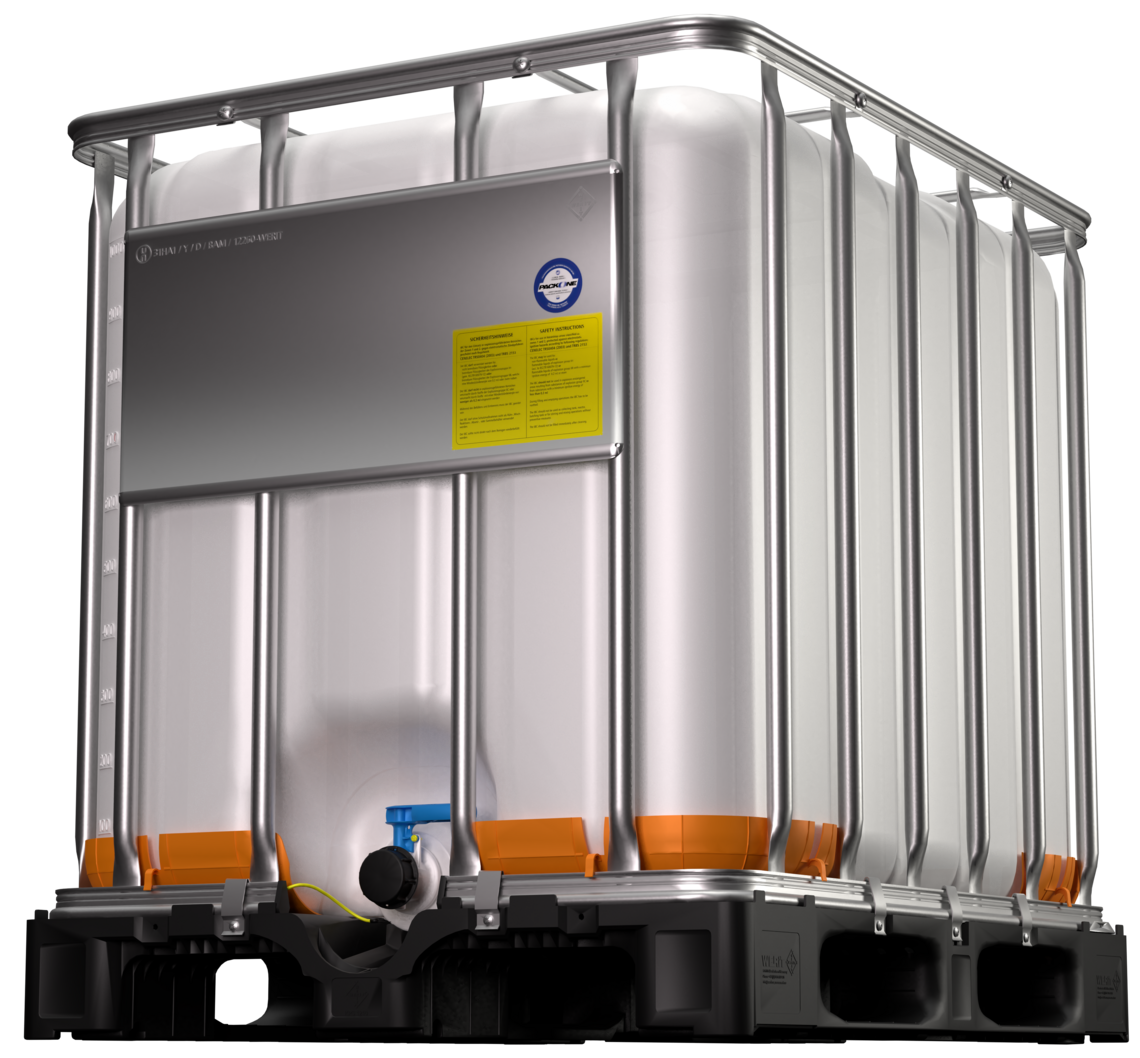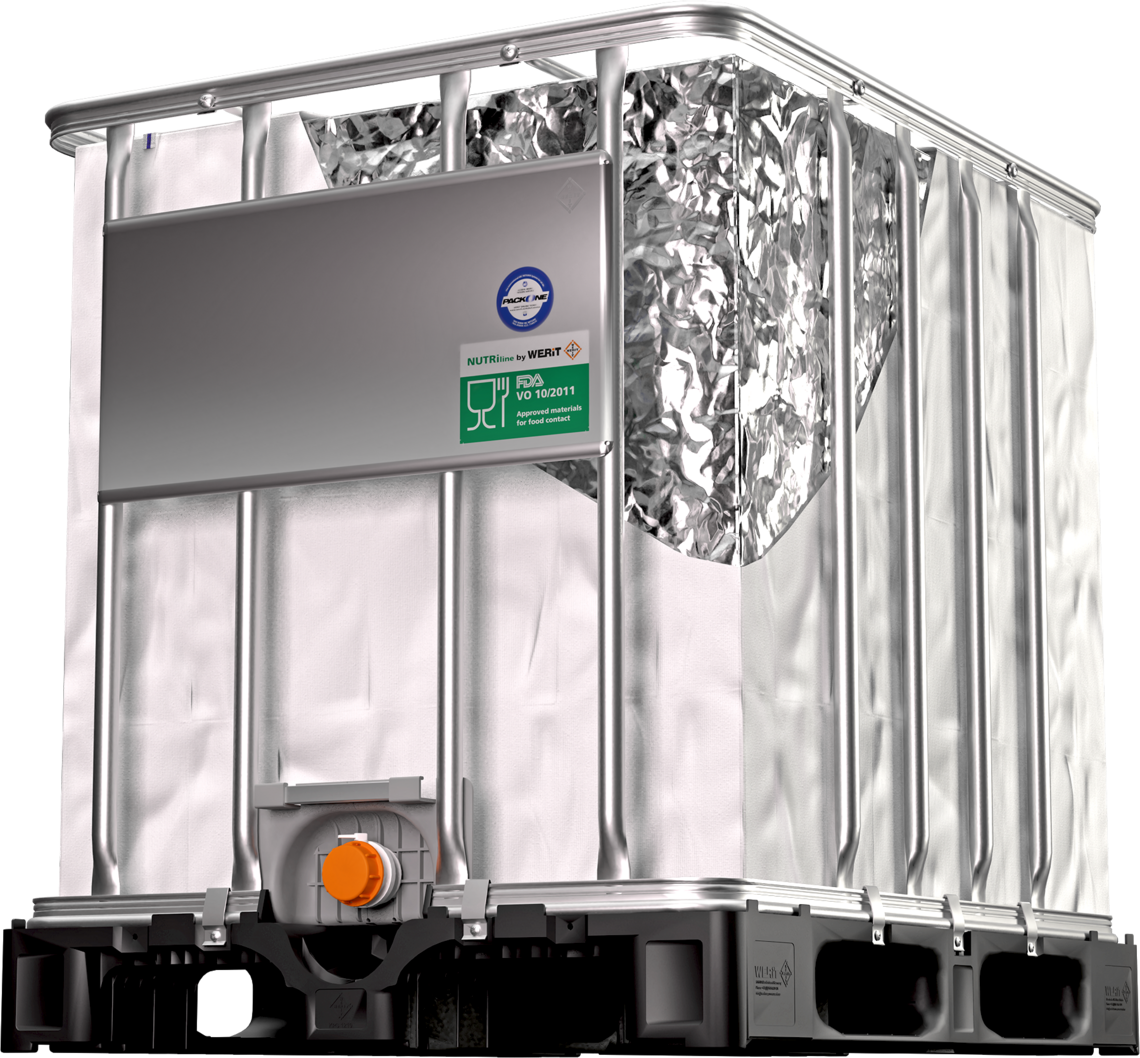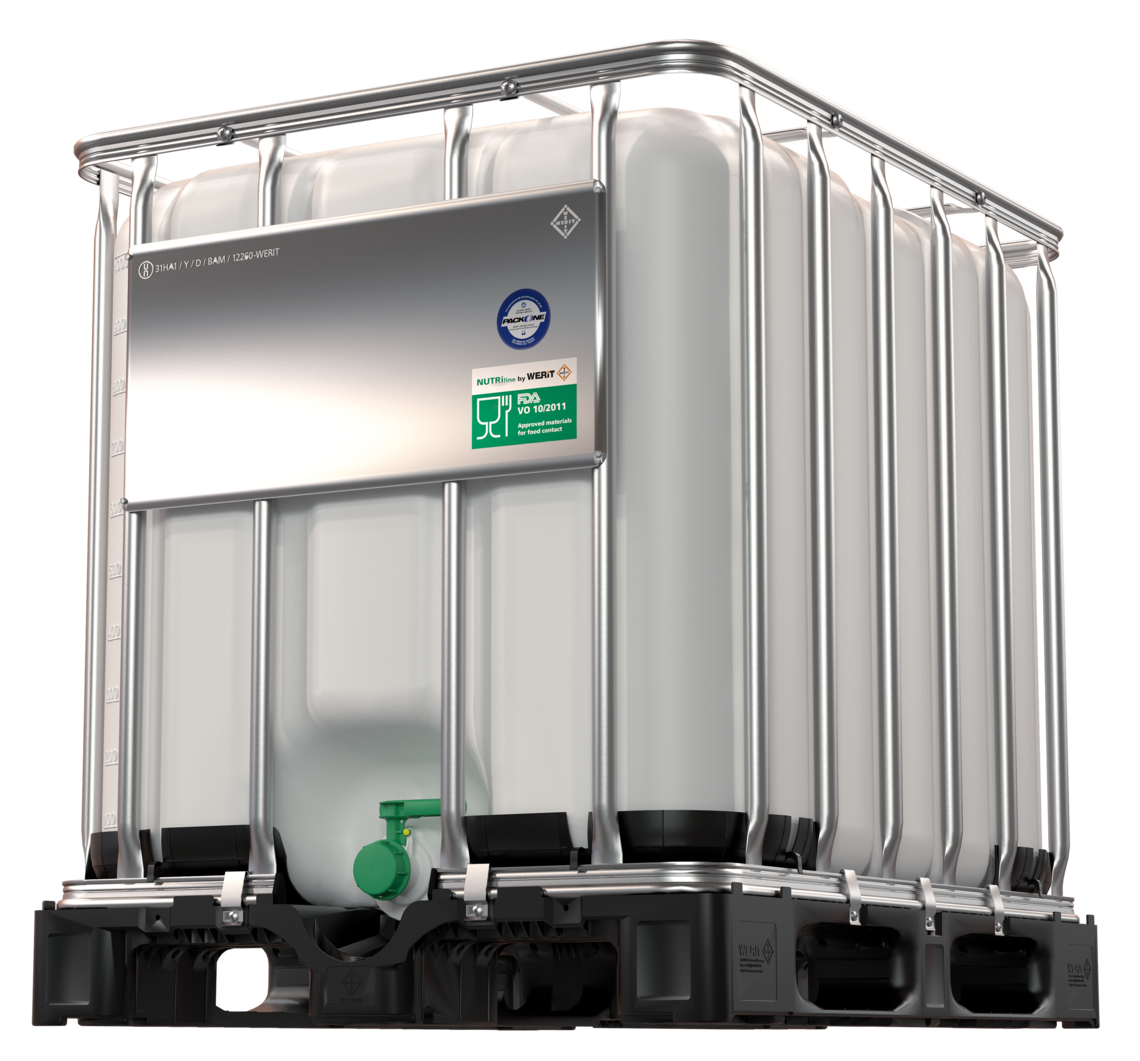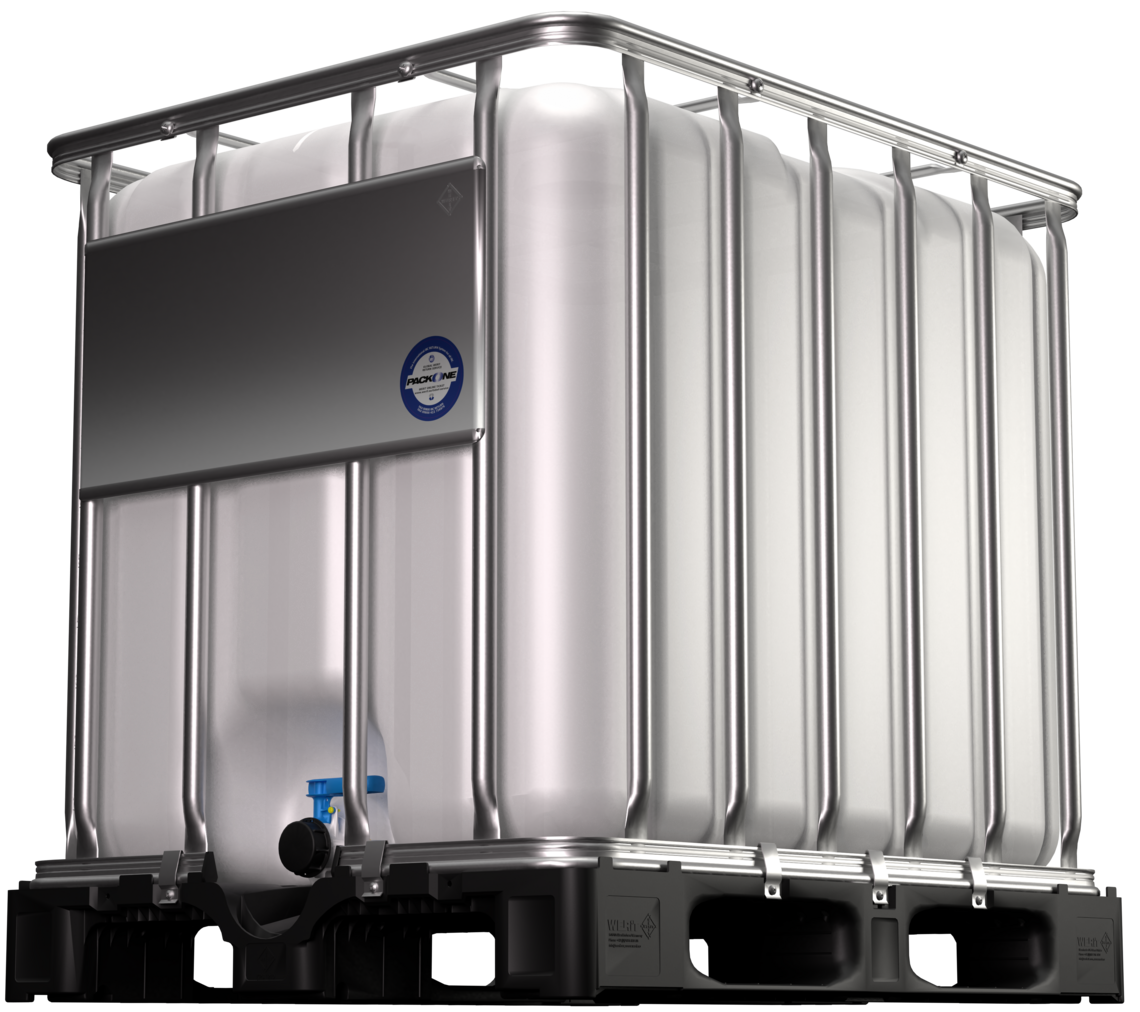
IBC containers for AdBlue® - safe storage and transport
Intermediate Bulk Containers (IBC) approved for AdBlue fulfil special requirements for material compatibility and safety. AdBlue is an aqueous urea solution (32.5% urea, 67.5% demineralised water) that is used for exhaust gas aftertreatment in SCR systems. Due to its chemical composition, AdBlue may only be stored and transported in containers that are corrosion-resistant and chemically inert to urea.
Characteristic features of approved IBCs:
- Material: food or chemical compatible polyethylene inner container, often surrounded by a sturdy metal or plastic lattice box.
- Certification: CE-marked according to UN 31 HA1/Y for the transport of AdBlue and compliant with DIN 70070/ISO 22241 for storage and handling.
- Connections: Standardised outlet taps and filling openings made of materials that do not react with AdBlue, often with caps to protect against contamination.
- Application: Suitable for storage, transport and direct filling of vehicle tanks with AdBlue, both in commercial and industrial applications.
The use of an approved IBC guarantees the product purity of AdBlue, prevents crystallisation and corrosion and meets the legal requirements for transport and storage.
Dimensions
The following dimensions are standardised IBCs for fillers up to a density (Rho) of 1.6
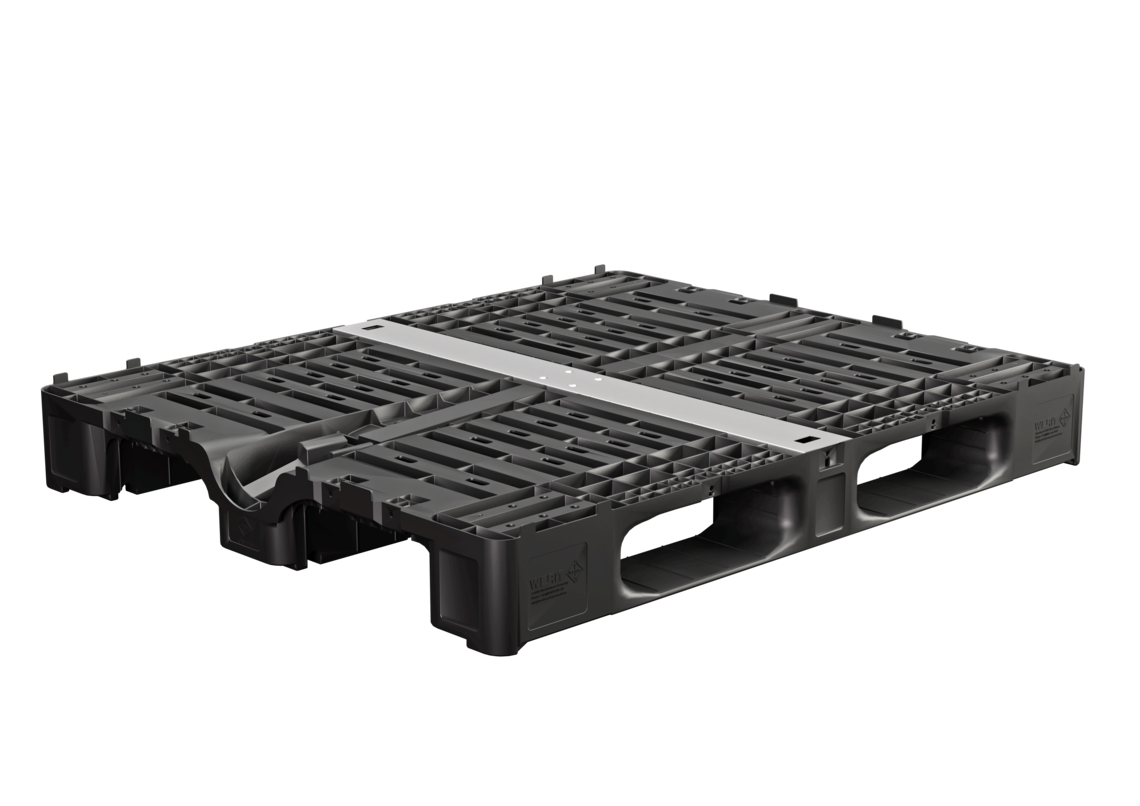
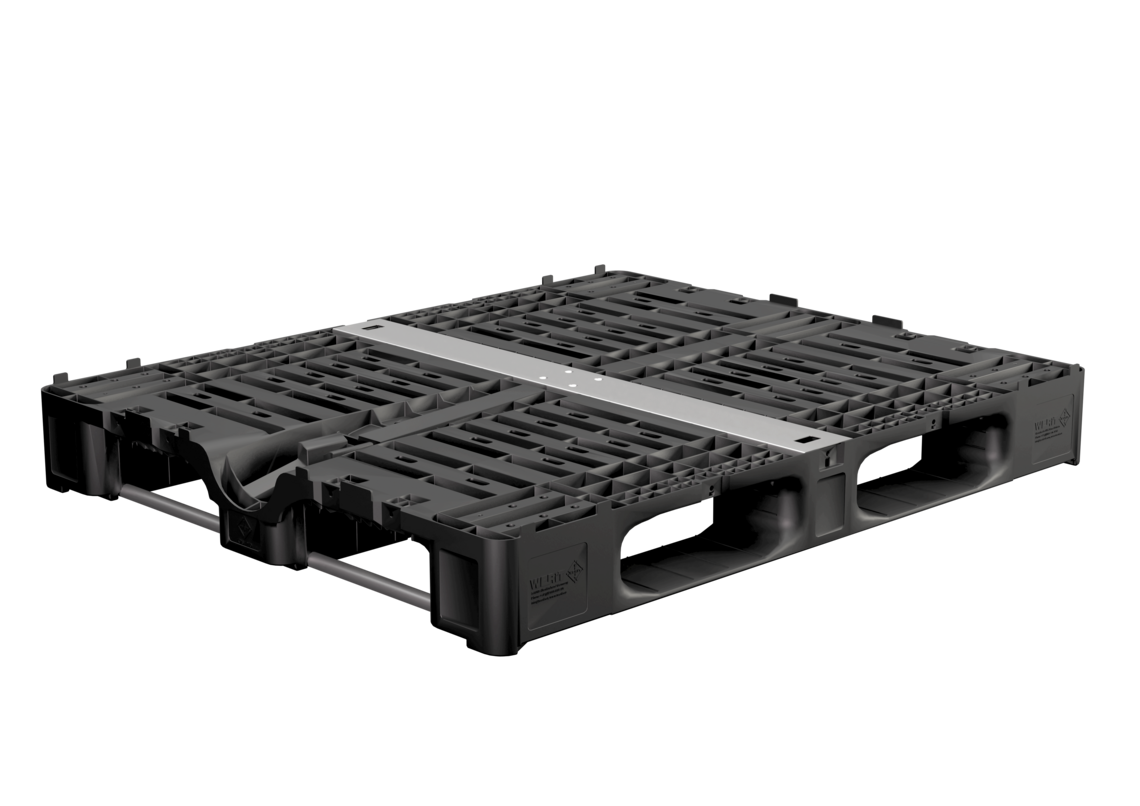
Plastic pallet
Skid pallet
max. 1.6 kg/l
Material: Polyethylene
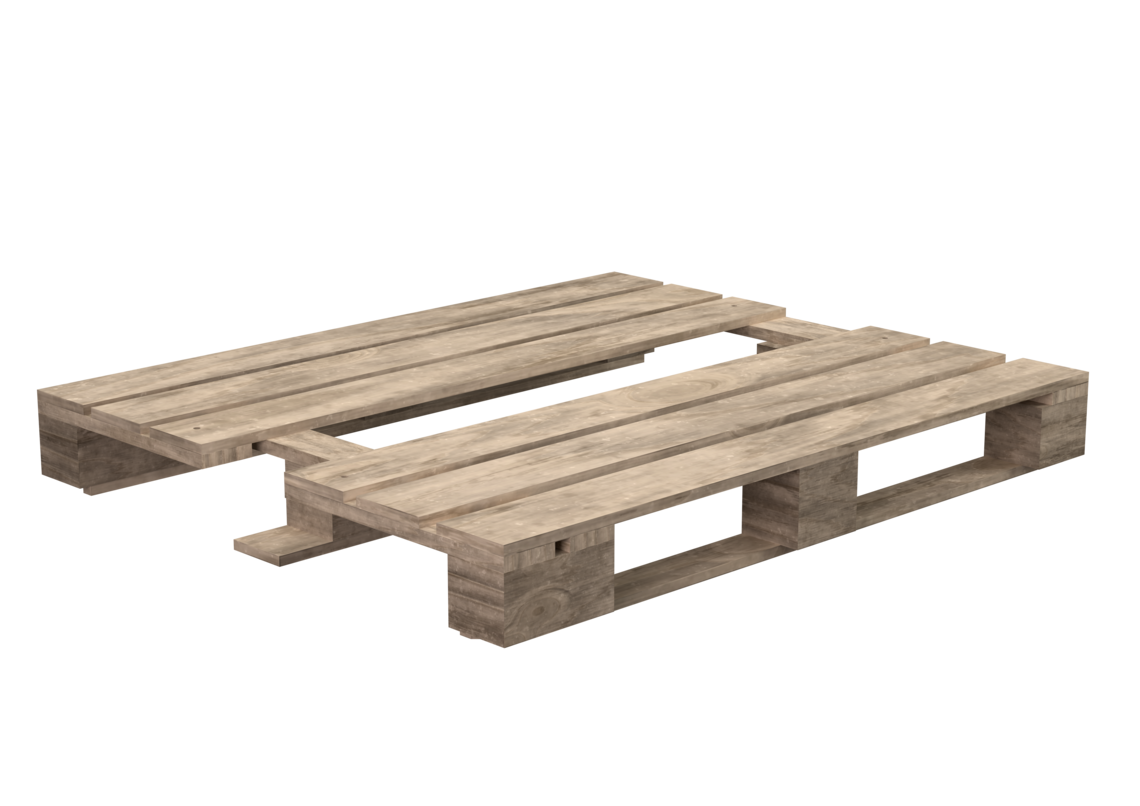
IPPC wood
Wooden skid pallet
max. 1.6 kg/l
Material: IPPC Wood (Stackable)
Plastic pallet
Frame range
max. 1.9 kg/l
Material: Polyethylene
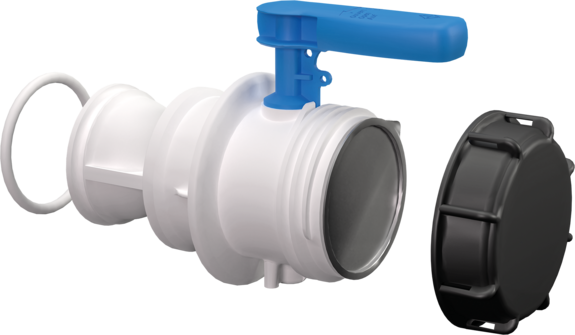
Valves
We offer integrated or interchangeable valves.
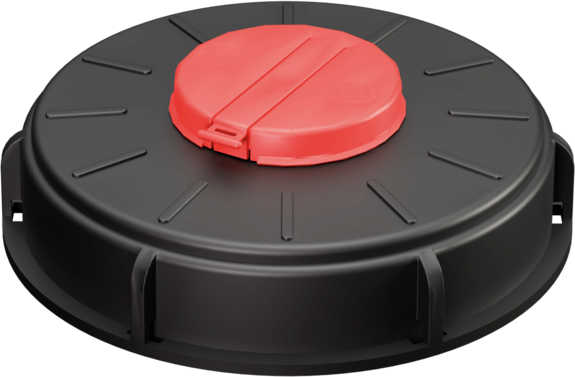
Lids
IBC container reconditioning
WERIT offers its customers a high level of service - including IBC reconditioning, the free return of containers and the collection of used and empty IBCs at attractive prices.
In the responsible handling of raw materials and resources, WERIT is constantly working on new, innovative and intelligent solutions for containers and packaging systems as well as their collection and environmentally friendly recycling. The WERIT IBC modular system shows its full strengths in this area: It enables problem-free cleaning as well as economical reconditioning by changing individual components. In this way, WERIT guarantees resource-saving and economical reuse.
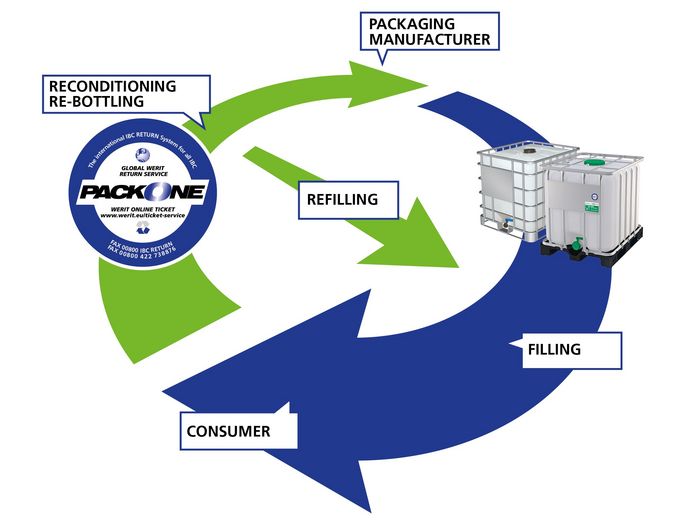
We take back all WERIT IBC containers via the WERIT RECOLine and return them to the resource cycle. Are you looking for a competent partner to take back emptied IBCs from other manufacturers? We guarantee this via PACKONE©. Here, a specially designed inner container from WERIT enables the IBC modules to be recycled - regardless of the brand - so that a new, UN-approved PACKONE IBC is created.
Use our All-in-One PackOne WERIT ticket service today and let us collect your used and empty containers free of charge (please note our return conditions). Simply fill out the IBC return ticket - we will take care of the rest.
FAQ
HDPE (High Density Polyethylene) is a robust and resistant plastic, which - in the case of our IBC containers - is UV-resistant and translucent. If the contents are to be protected from UV radiation, black containers should be used. Our IBC accessories are also made of this special material with UV protection. HDPE plastic is produced by the industrial polymerisation of ethylene. In the early days, this raw material was still milky and waxy, but has since developed into an innovative, thermoplastic material with ideal moulding properties and can be optimally adapted to all specific requirements by adding additives. The HDPE plastic with UV protection that we use is dimensionally stable at temperatures from -40 to +70 °C and is resistant to most acids, alkalis and chemicals.
An interesting fact at the end: HDPE plastic has been used commercially since 1957 for cable insulation, in pipework systems and packaging materials.
The dimensions for the filling openings on the top of the containers are the same for all three product lines. The ECOline IBC (Non UN), TOPline IBC (UN) and POLYex IBC containers have either an NW 150 or NW 225 filling opening with screw cap and optional ventilation. In addition, there are ECOline IBCs (non-UN) with an NW 400 filler opening with a clamping ring lid, often used for materials where transport containers and tanks are still listed.
All our IBC containers have an NW 50 or NW 80 outlet valve, which is integrated or replaceable, and an outlet tap for liquids. These valves are also available with fine thread or coarse thread and various internal threads or external threads (such as S60x6).
Of course, the IBC can be used for rainwater utilisation. Our containers with UN approval (hazardous goods and foodstuffs approval) are suitable for storing and transporting almost all liquids - so why not use them as IBC rainwater tanks for the garden or pond? The (food) industry is already using IBC tanks as water tanks, containers for fish farming, ballast tanks or drinking water tanks. In agriculture, IBC tanks are also used in the countryside as grazing troughs for horses, cows and sheep. A comprehensive frame, sometimes also referred to as a "lattice box", protects our tanks from deformation.
Our offer is aimed exclusively at large B2B customers and is not intended for end consumers (B2C). End users are requested to contact a dealer.
The WERIT IBC is particularly suitable for recycling and reconditioning due to its design and durability. The company has developed a unique take-back and recycling system for all used IBC containers, regardless of manufacturer and design. WERIT offers free take-back of all IBC containers via the PACKONE ticket. Reliable partners take care of the collection of used IBCs and professional reprocessing. After cleaning the IBC or replacing the inner container, the IBCs are refilled - for a resource-saving use of raw materials and the environment.
Modern logistics processes in a wide range of industries, such as chemicals, automotive and pharmaceuticals, require sustainable and resource-saving processes and closed-loop systems. Strong partnerships are a good basis for perfect and reliable performance. The WERIT IBC is particularly suitable for recycling and reconditioning due to its design and durability. The company has developed a unique take-back and recycling system for all used IBCs, regardless of manufacturer and design. For your information, WERIT offers free take-back of all IBC containers via the PACKONE ticket. Reliable partners take care of the collection of used IBCs and professional reprocessing. After the IBC tank or container has been cleaned or the inner container has been replaced, these IBCs are returned to the economic cycle, thus conserving resources and protecting the environment. Many customers have discovered the major logistical and economic benefits for themselves and utilise the open or closed loop system from WERIT. By recycling the returned intermediate bulk containers, this packaging material is exemplary for environmentally friendly packaging. Reusable transport packaging and bulk packaging. After cleaning or replacing the inner container or individual components, these IBCs are returned to the economic cycle. The function and usability of the reconditioned IBCs, including UN versions of course, are almost equivalent to new products. Both after cleaning and after rebottling, the prescribed inspections and tests are carried out so that the reconditioned IBC with UN approval can be used safely for hazardous substances.
With WERIT's various closed loop and open loop systems, customer-specific requirements can be optimised in order to achieve the best possible economic and ecological efficiency. It also leads to CO2 savings and an improvement in the CO2 balance. The return of the small 300 litre IBC, the only IBC in this size range and with this capacity on the market, is also carried out very easily using the PACKONE system from WERIT. The COMPACTline with UN approval is therefore an intelligent alternative to drums and particularly sustainable packaging alongside the 600, 800 and 1,000 litre IBC sizes already established on the market.
An IBC is an "Intermediate Bulk Container", i.e. a container for the storage and transport of liquid media. It is used for liquids and hazardous goods, among other things, and consists of an HDPE inner container with a tubular steel frame. Common sizes are between 300 and 1000 litres.
IBC is the abbreviation for "Intermediate Bulk Container" and refers to a medium-sized transport and storage container that is primarily used for liquid substances.
The empty weight of an IBC container varies depending on its size and design. A 1000 litre IBC weighs around 50-60 kg when empty. The total weight increases depending on the filling medium, for example by around 1000 kg for water. Smaller IBC sizes weigh correspondingly less.
IBC containers are available in standardised sizes from 300 to 1000 litres. A 1000 litre IBC typically has external dimensions of around 1200 × 1000 × 1163 mm (L × W × H). The dimensions are designed for pallet logistics.
HDPE IBC containers retain their shape within a temperature range of -20°C to +70°C. The suitability for use in frosty conditions also depends on the frost resistance of the filling medium.