Product details
Use I Requirement
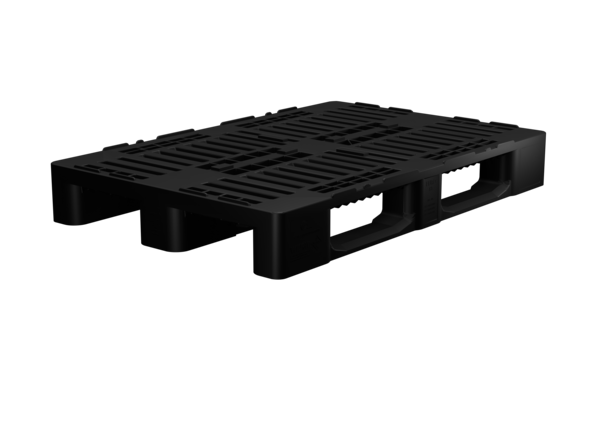
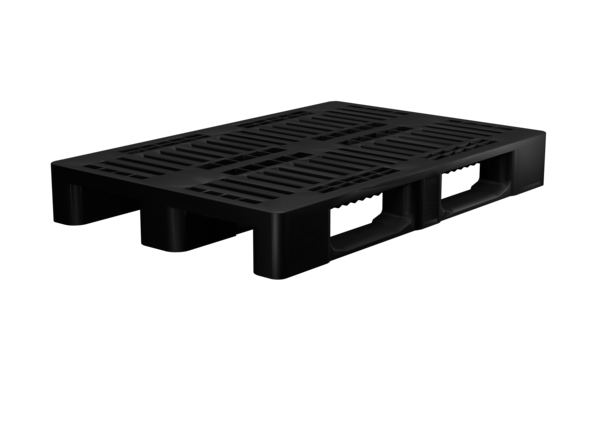
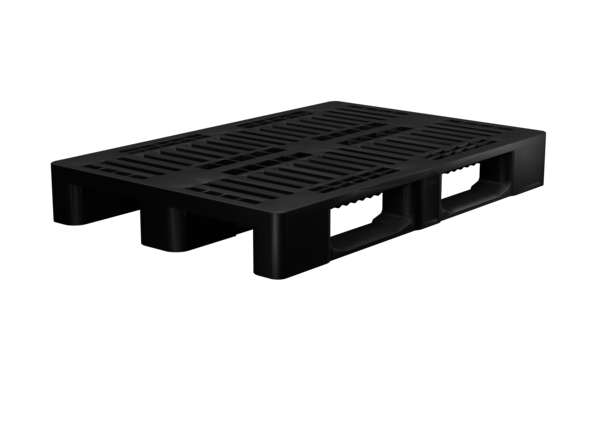
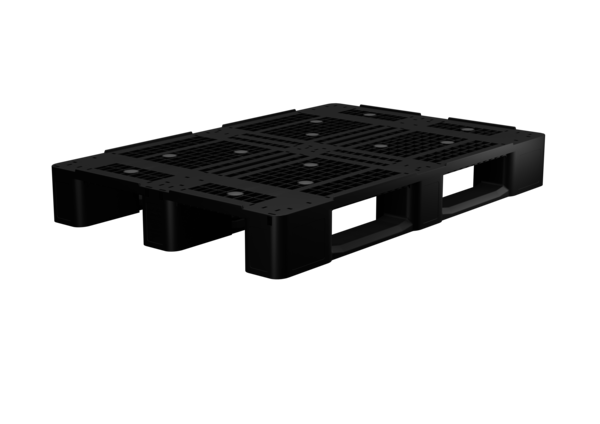
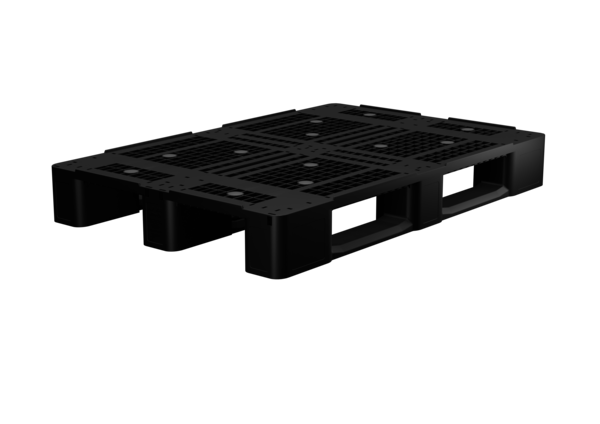
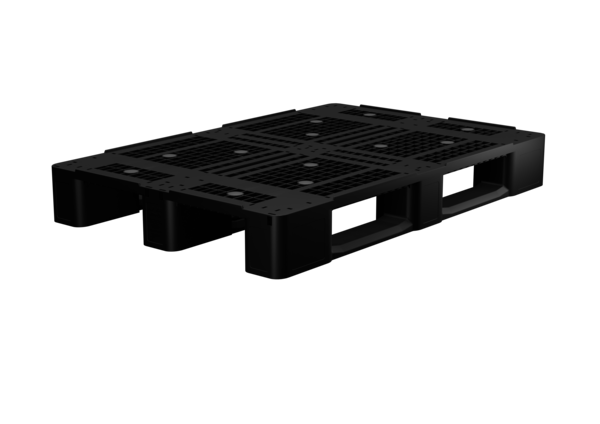
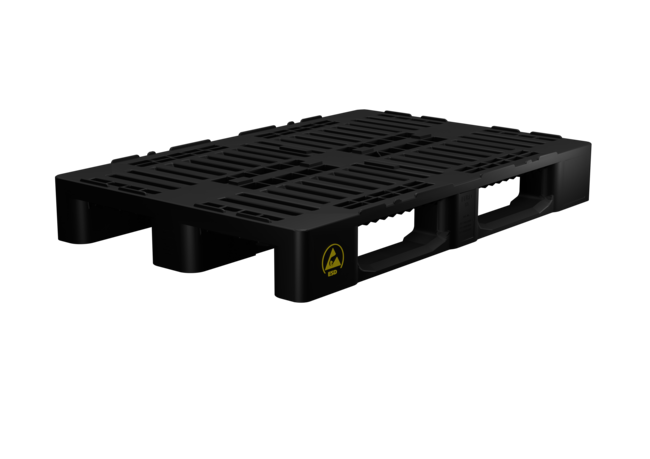
The H1L from WERIT has been especially developed for the automobile industry and their suppliers. Being a conductive and antistatic plastic pallet, it protects the electrostatically endangered components against being charged. They therefore represent a perfect supplement to conductive plastic containers.
Special features
- Conductive plastic pallet for use in the automobile, chemical and electrical industry: surface resistance <10^6 Ω, according to DIN IEC 61340-5-1
- Dimensionally stable from -30°C to +60°C
- Particularly robust and economical for a high loading
Note:
hot imprinting of fonts, logos and numbers are possible on request depending on the quantity.
-
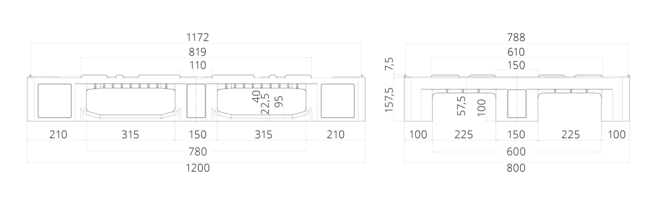
External dimensions1200 x 800 x 160 mm
-
Weight18.5 kg
-
MaterialHDPE
-
Colour
-
Anti-slip edge7 mm
-
Skids3 not welded
-
Load capacity (static)5000 kg
-
Load capacity (dynamic)1000 kg
Container loading quantity
-
20' container192
-
40' container390
-
40' container High Cube440
Truck loading quantity
-
Trailer612
-
Jumbo684
Worth knowing
Chemical resistance data sheet
Notes
All dimensions, weights and technical data listed are approximate values. They do not constitute a binding guarantee of specific properties or suitability for specific applications. Technical tolerances in accordance with DIN standards. Subject to alterations and errors.
The information is based on our current technical knowledge and experience. Due to the abundance of possible external influences in the application of the products, which are beyond our control, they do not exempt the user from carrying out his own tests and trials.
No legally binding assurance of certain properties or suitability for a specific purpose can be derived either expressly or implicitly.
Industrial property rights must be observed where applicable.
FAQ
If a plastic pallet measures 1200x800 millimetres, it is the most common type of Euro pallet in this country. This is also known as the Europool pallet and enables a large proportion of trade within Europe to be handled. The base area of 0.96 m² and the 0.4 loading metres are clearly prescribed and are reflected in this form in the industry standard EN 13689-1. Unlike the frequently encountered wooden versions, the plastic pallet is significantly lighter. The stability does not suffer as a result and there is also a wide range of designs available. Plastic pallets are available both with and without anti-slip edges and always have three integrated, non-welded runners. This means that Euro pallets can be transported perfectly using a pallet truck or forklift.
The term Euro pallet is an established international term. In any case, it is a so-called four-way pallet, which refers to the fact that it can be gripped and transported from four sides. The European Pallet Association (EPAL) has authorised 17 types of wood alone for the production of Euro pallets, although plastic is of course also suitable and has become particularly popular in combination with IBC containers or as a pooling pallet in the food industry. The "invention" of the Euro pallet dates back to the early 1960s. Initially, it was the Union of International Railways (UIC) that called for a standardised system and created the Euro pallet in 1968. The standard has been implemented in Germany since the 1970s and the "Euro pallet" unit can now also be found in lorries, railway wagons and many other areas.
Unlike the wooden alternative, a 1200x800 plastic pallet hardly weighs anything. Depending on the moisture content of the wood used, the Euro pallet weighs between 20 and 24 kilograms, while a plastic pallet starts at just twelve kilograms and never weighs more than 18 kilograms. The load capacity, on the other hand, is statically up to five tonnes and dynamically a maximum of 1.5 tonnes with a minimum of one tonne. If the plastic Euro pallet is used in a high-bay racking system, a load of up to 1.25 tonnes can also be achieved. A major difference to wooden pallets, which also function as exchangeable pallets, is the overall height. This is 150 or 160 millimetres for the 1200x800 plastic pallet, compared to 144 millimetres for wooden pallets.